
With childhood myopia (nearsightedness) on the rise globally, eye care researchers are actively searching for safe, non-invasive ways to slow down eye elongation in young patients. While repeated low-level red light therapy has generated significant interest, concerns around high-energy laser exposure have prompted scientists to look toward gentler alternatives.
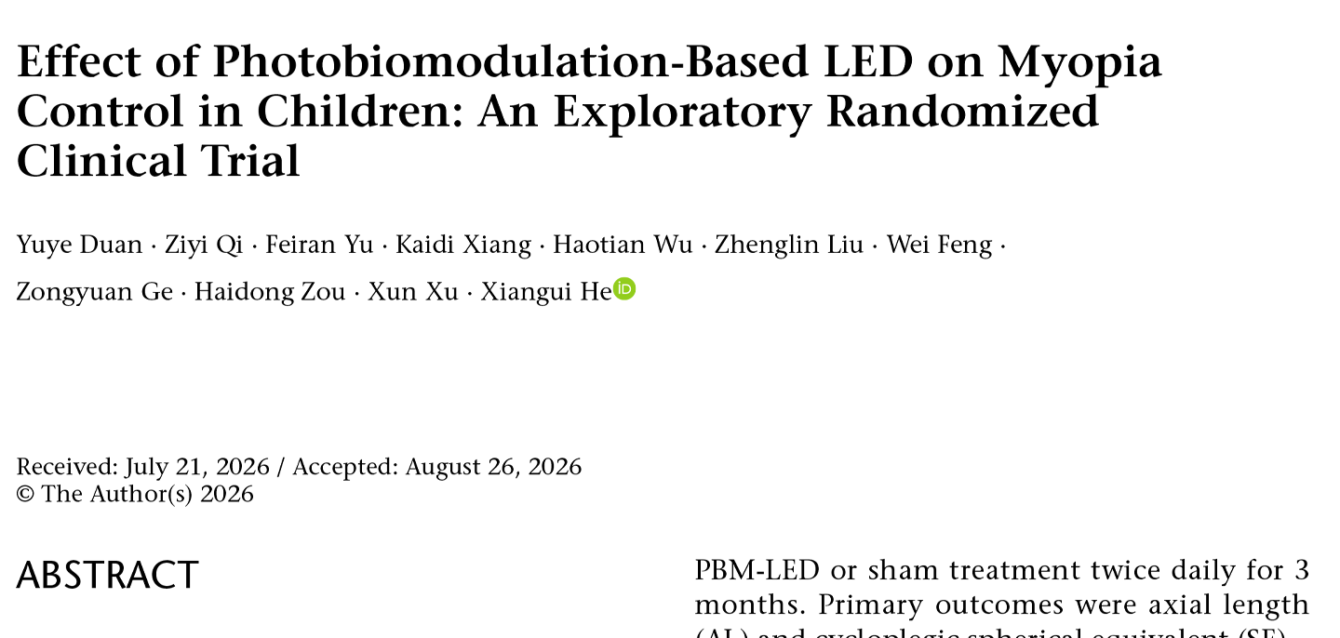
A 3-month exploratory randomized clinical trial published in Ophthalmology and Therapy investigated whether low-intensity, non-coherent LED-based photobiomodulation (PBM-LED) can offer a safer profile while still helping manage myopia progression in children.
What Was the Study Testing?
Researchers evaluated a desktop LED-based device (AI-PBM01 / AirDoc) in a double-masked trial involving 40 myopic children aged 8 to 12.
Unlike traditional high-power laser units, this LED device was designed with specific safety parameters in mind:
-
Diffuse Energy Output: Uses non-coherent light-emitting diodes (LEDs) rather than concentrated laser beams.
-
Targeted Design: Uses an annular light pattern that targets the parafoveal region while avoiding direct irradiation to the central retina (fovea).
-
Treatment Schedule: Participants used the desktop device at home for 3 minutes twice daily over a 3-month period.
Key Findings: Safety vs. Treatment Effect
The exploratory trial provided valuable insights into both the safety margins and the early effectiveness of LED-based light therapy:
1. Excellent Safety Profile
Safety was a primary focus of the trial, and the LED device performed exceptionally well:
-
No Retinal Damage: Advanced OCT imaging revealed zero structural retinal abnormalities or ocular tissue damage across all participants.
-
No Serious Adverse Events: No participants experienced severe side effects or had to discontinue the treatment due to adverse reactions.
-
ANSI Group 1 Safety: The diffuse LED light source remained well within official optical safety limits, even under extended exposure conditions.
2. Preliminary, Modest Efficacy
When evaluating how well the device slowed myopia progression (measured by axial length elongation and refractive changes):
-
Eye-Specific Differences: The active treatment group showed less axial elongation compared to the control group, reaching nominal statistical significance in the left eye at 3 months.
-
Overall Trend: While participant-level averages pointed in a positive direction, the adjusted overall differences between the treatment and control groups were modest and did not reach full statistical significance.
What Does This Mean for the Future of Myopia Control?
The findings suggest that LED-based photobiomodulation is a promising, safety-first alternative to high-power red lasers. By using lower energy and avoiding direct foveal exposure, LED devices eliminate many of the retinal safety risks currently associated with laser-based red light treatments.
However, because the treatment effect was subtle and the study lasted only 3 months, researchers emphasize that larger, long-term clinical trials are necessary to determine whether LED photobiomodulation can deliver lasting, clinically meaningful results for childhood myopia.
The Bottom Line
LED-based red light therapy offers an encouraging glimpse into safer myopia interventions, but it is not a quick fix. Parents and practitioners should view it as an emerging technology that requires further long-term verification.
Always consult an optometrist or ophthalmologist to discuss established, evidence-based options for managing your child’s myopia.
Read the full open-access study in Ophthalmology and Therapy.